Why Motivation Is a Terrible Training Plan — And What Actually Works
Motivation is unreliable. Science-backed strategies — identity shifts, habit stacking, adaptive training, and enjoyment — are what actually keep you consistent.
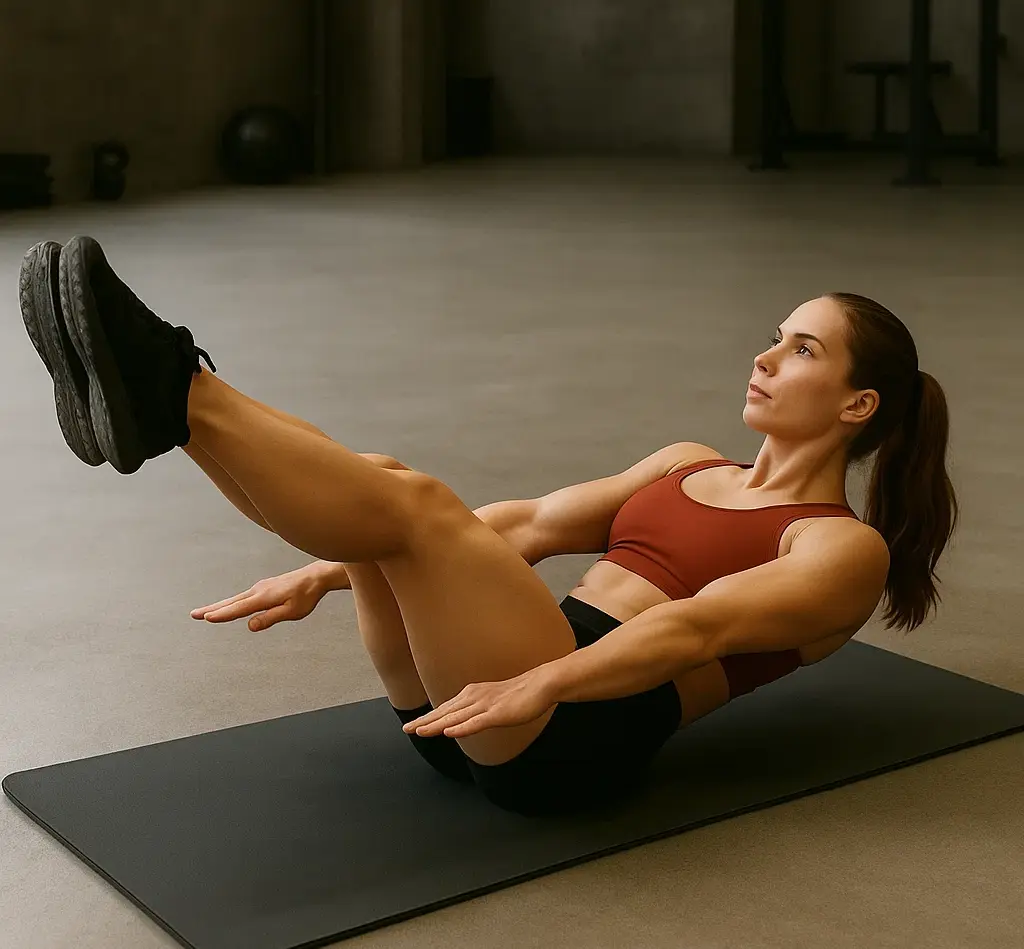
Why Motivation Is a Terrible Training Plan — And What Actually Works
Most people start a workout routine motivated. The problem is that motivation is unreliable, emotional, and fleeting. It peaks in January, dips in February, and disappears entirely by the time life gets busy. If your fitness depends on feeling like it, you're going to struggle.
Quick Takeaways
- Intrinsic motivation (enjoyment, wellbeing) sustains exercise far longer than extrinsic goals
- Framing exercise as part of your identity increases habit adherence by 32%
- Habit stacking increases habit adoption by 64% vs starting from scratch
- Enjoyment is one of the strongest predictors of long-term exercise adherence
The good news: science has spent decades figuring out why motivation fails — and what to do instead. Here's what the research actually says.
Motivation Isn't One Thing
Before we talk about keeping motivation, it's worth understanding what it is. Psychologists distinguish between two very different types: intrinsic and extrinsic motivation.
Extrinsic motivation is driven by external rewards — losing weight for an event, impressing someone, hitting an arbitrary number on a scale. Intrinsic motivation comes from within — you train because it makes you feel strong, because it relieves stress, because you genuinely enjoy the process.
This distinction matters more than most people realise. Self-Determination Theory (SDT), one of the most cited frameworks in exercise psychology, finds that people driven by intrinsic goals — enjoyment, personal growth, wellbeing — are far more likely to sustain physical activity long-term than those chasing external outcomes. Extrinsic goals get you started. Intrinsic ones keep you going.
A 2024 study published in Frontiers in Psychology found that exercise motivation rooted in enjoyment and personal fulfilment was the strongest predictor of both physical activity levels and mental health — outperforming every other motivational category measured.
Practical takeaway
Ask yourself why you're training. If the answer is entirely outcome-based ("I want to look a certain way"), you may need to find additional reasons that will sustain you when results feel slow. Stress relief, energy levels, the feeling after a good session — these are powerful intrinsic motivators that don't fluctuate with the scale.
The Identity Shift That Changes Everything
One of the most striking findings in recent habit research is that how you frame your relationship to exercise predicts whether you'll stick with it.
Research published in the Journal of Personality and Social Psychology found that people who framed exercise as part of their identity ("I'm someone who trains regularly") were 32% more likely to maintain the habit compared to those focused on outcomes alone ("I want to lose weight"). When a behaviour becomes part of how you define yourself, consistency follows almost automatically.
This isn't a motivational trick — it's a cognitive reframe backed by data. The goal isn't just to do workouts. It's to become someone who works out.
Motivation Fluctuates. Your System Shouldn't.
Stanford behaviour scientist BJ Fogg has shown that motivation naturally rises and falls in waves — it's not a tap you can leave on permanently. His research argues that designing for low-motivation moments — by reducing friction and making the behaviour as easy as possible — is more effective than trying to sustain high motivation indefinitely.
This is where habit stacking comes in.
Habit stacking is the practice of attaching a new behaviour to an existing one. Instead of relying on willpower, you piggyback a workout onto something you already do automatically. The formula is simple: "After [current habit], I will [new habit]."
A 2025 study published in the Journal of Applied Psychology found that habit stacking increased habit adoption by 64% compared to starting from scratch. The neurological reason is straightforward: your brain links new behaviours to existing neural pathways, making the new action progressively more automatic over time.
- After making your morning coffee → do a 10-minute bodyweight workout
- After brushing your teeth at night → lay out your workout clothes
- After lunch → take a 5-minute walk that transitions to a quick session
The most important rule is starting small. Research suggests that habits take anywhere from 18 to 254 days to form, with an average of 66 days. The people who succeed are the ones who make the early sessions so easy they feel almost silly.
The Plateau Problem: When Progress Stalls
Motivation often collapses not at the start — but after the initial progress slows. You're no longer a beginner seeing rapid gains. Your sessions feel harder for seemingly less reward.
The research is clear: adaptive progression — training that matches your actual fitness level — keeps people engaged far longer than fixed routines.

Practically, this means honestly reassessing your effort level regularly. If workouts feel too easy, you're not being challenged enough to stay interested. If they're consistently leaving you wrecked, that's not sustainable either. The sweet spot — psychologists sometimes call it the "challenge-skills balance" — is where real motivation lives.
What Recovery Days Have to Do With It
Here's something counterintuitive: poor recovery is one of the biggest killers of long-term motivation. When you're constantly fatigued, workouts feel worse, performance drops, and your brain starts associating exercise with exhaustion rather than reward.
Research on exercise intensity and mood shows that high-intensity training, without adequate recovery, can actually increase fatigue, irritability, and negative affect — the exact opposite of what motivates continued exercise. Low-to-moderate intensity movement on rest days, by contrast, supports mood and keeps the habit alive without digging into recovery debt.
Active recovery — light movement that keeps your body moving without taxing it — is a legitimate training tool, not a compromise.
Tracking, Streaks, and the Power of Small Wins
One of the most reliable ways to maintain motivation is making progress visible. Studies show that people who track their habits are up to 33% more likely to stick with them. The mechanism is partly psychological — seeing a streak of completed workouts triggers a genuine reluctance to break it — and partly neurological. Completing a habit and acknowledging it releases dopamine, reinforcing the behaviour.
Tracking doesn't have to be elaborate. A calendar with Xs marked through completed training days, a simple note in your phone, or a check-in in an app all work. The key is making progress visible in some form.
Lowering the Barrier to Starting
Motivation researcher BJ Fogg famously observed that motivation and ability work inversely: when motivation is low, you need ability to be high — meaning the behaviour must be as easy as possible to execute. This is why environmental design matters so much.
Research on contextual cueing consistently shows that when a habit is tied to something visible or consistent in your environment, follow-through increases significantly. Laying out your workout clothes the night before, having your session queued up and ready to go, removing the steps between "thinking about training" and "actually training" — these seemingly small frictions matter a great deal at the margins.
If getting started is effortless, you're far more likely to actually start. And once you're five minutes into a session, the motivation usually follows.

A Note on Enjoyment
One finding across the motivation literature is remarkably consistent and often underappreciated: enjoyment is one of the strongest predictors of exercise adherence.
Not weight loss. Not performance metrics. Not discipline. Finding a format you actually like isn't a luxury — it's strategy.
Research repeatedly shows that people who find their training enjoyable — who look forward to it, or at least find it satisfying — are dramatically more likely to keep doing it. This has real implications for choosing how you train. If you dread every session, that's not toughness — it's a sustainability problem.
That might mean training at home instead of commuting to a gym. It might mean bodyweight work because equipment feels like a barrier. It might mean shorter, focused sessions that leave you feeling accomplished rather than destroyed. The best workout is the one you'll actually do — consistently, over months and years.
What Kills Long-Term Consistency
- Relying on motivation alone: It rises and falls — build systems instead
- Outcome-only goals: Results are slow; you need intrinsic reasons to keep going
- Ignoring recovery: Chronic fatigue makes exercise feel punishing, not rewarding
- High friction: Every extra step between you and starting is a dropout risk
- Dreading your workouts: Unsustainable — find a format you can actually enjoy
The Honest Summary
Motivation is not a switch you flip on and keep on. It rises and falls, and the research is clear: relying on it as your primary fuel is a plan that will eventually fail.
What works instead is a combination of things:
- Anchoring training to your sense of identity, not just outcomes
- Building automatic habits through stacking and environmental design
- Training at the right difficulty level — challenging but sustainable
- Tracking progress to make consistency visible and rewarding
- Prioritising recovery so exercise feels like something that energises you, not depletes you
- Choosing formats you genuinely enjoy
None of this is revolutionary. But applied consistently, it's what the science shows actually keeps people moving — not just for a week or a month, but long enough to actually change.
Build the System, Not Just the Habit
Hiitology is designed for exactly this: low friction, adaptive difficulty, and workouts you can actually enjoy. Every session is generated automatically — no planning, no guesswork.
- Unique workouts every time — no repeated routines
- Adaptive difficulty based on your feedback
- Voice coaching to keep you on track
- Strava integration to make progress visible
- Works anywhere — home, hotel, park
- Completely free
Ready to Start Your HIIT Training?
Download Hiitology and get access to video-guided HIIT workouts with adaptive difficulty and voice coaching.
Download on App StoreRelated Articles
HIIT Workout Using Bodyweight: The Complete Guide (2026)
Everything you need to know about bodyweight HIIT workouts — exercises, sample routines, and how to get started with no equipment required.
Gym vs Bodyweight Training: Which Is Better?
Compare gym training and bodyweight workouts. Discover the pros, cons, and which approach is best for your fitness goals.
How to Work Out Without a Gym: Complete Home Fitness Guide
Discover effective strategies for staying fit without a gym membership. Learn bodyweight exercises, home workout routines, and equipment-free training methods.