How to Work Out Without a Gym: Complete Home Fitness Guide
Discover effective strategies for staying fit without a gym membership. Learn bodyweight exercises, home workout routines, and equipment-free training methods.
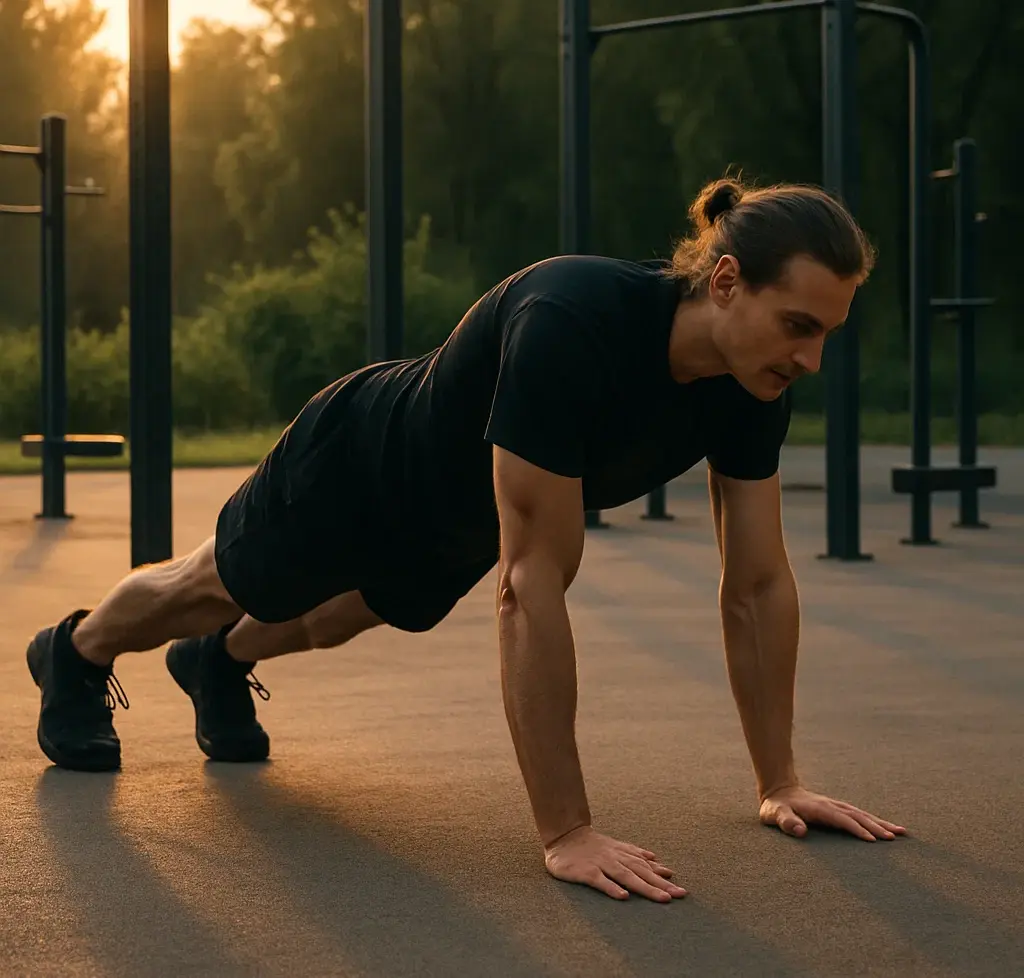
How to Work Out Without a Gym: A Practical Guide for Real People
The gym isn't for everyone. Maybe it's the monthly fees, the commute, the crowds, or just the feeling that you need a membership to be "serious" about fitness. Here's the truth: you don't need a gym to get fit. You just need the right approach.
Quick Takeaways
- Bodyweight training builds real strength and fitness without equipment
- The biggest challenge isn't the exercise—it's structure and consistency
- You only need 6x6 feet of space and 20-30 minutes
- Progressive overload still applies without weights
Why Working Out Without a Gym Actually Works
Your body doesn't know the difference between a barbell and bodyweight resistance. It only responds to tension, effort, and progressive challenge.
Research published in the Journal of Strength and Conditioning Research found that bodyweight training produces similar strength gains to traditional resistance training. Elite athletes—gymnasts, martial artists, military special forces—all rely heavily on bodyweight exercises. Their results speak for themselves.
But beyond the science, gym-free workouts offer practical advantages:
- Zero commute time - Work out in your living room, hotel room, or a park
- Complete schedule flexibility - Train at 6 AM or 11 PM, doesn't matter
- No membership fees - Save $500+ annually
- More consistency - Fewer barriers means you actually do it
- Location independence - Your workout travels with you
The convenience alone makes gym-free training worth considering. But there's a catch.
The Real Challenge: It's Not the Exercise
Pushups are pushups whether you do them at home or in a gym. The exercise itself isn't harder without a gym membership.
The hard part is everything else:
- What exercises should you do? There are hundreds of bodyweight movements. Which ones actually matter?
- How do you structure a workout? Random exercises produce random results. You need a system.
- Is your form correct? Without a trainer watching, how do you know you're doing it right?
- How do you progress? You can't just "add more weight" like at a gym. What's the progression path?
- How do you stay motivated? No gym buddies, no classes, no one holding you accountable.
This is why most people fail at home workouts. Not because the exercises don't work, but because they lack structure, guidance, and progression.
The good news? These problems are solvable.
The Foundation: What You Actually Need to Know
Essential Movement Patterns
Instead of thinking about individual muscles, focus on fundamental movement patterns. Every effective workout should include:
- Push: Pushups, pike pushups, dips
- Pull: Inverted rows (under a table), or towel rows if you have something to hang from
- Squat: Bodyweight squats, jump squats, single-leg variations
- Hinge: Single-leg deadlifts, glute bridges
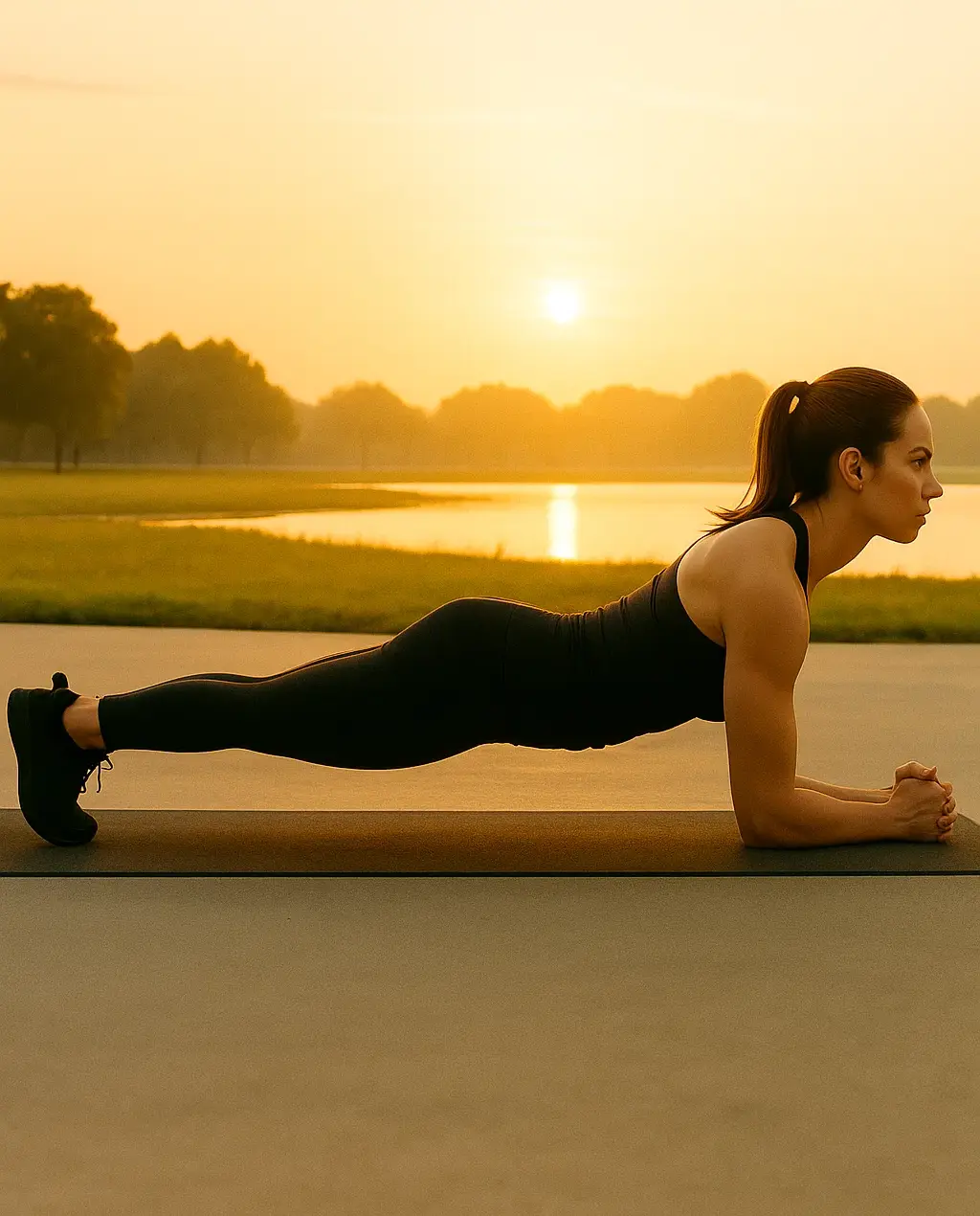
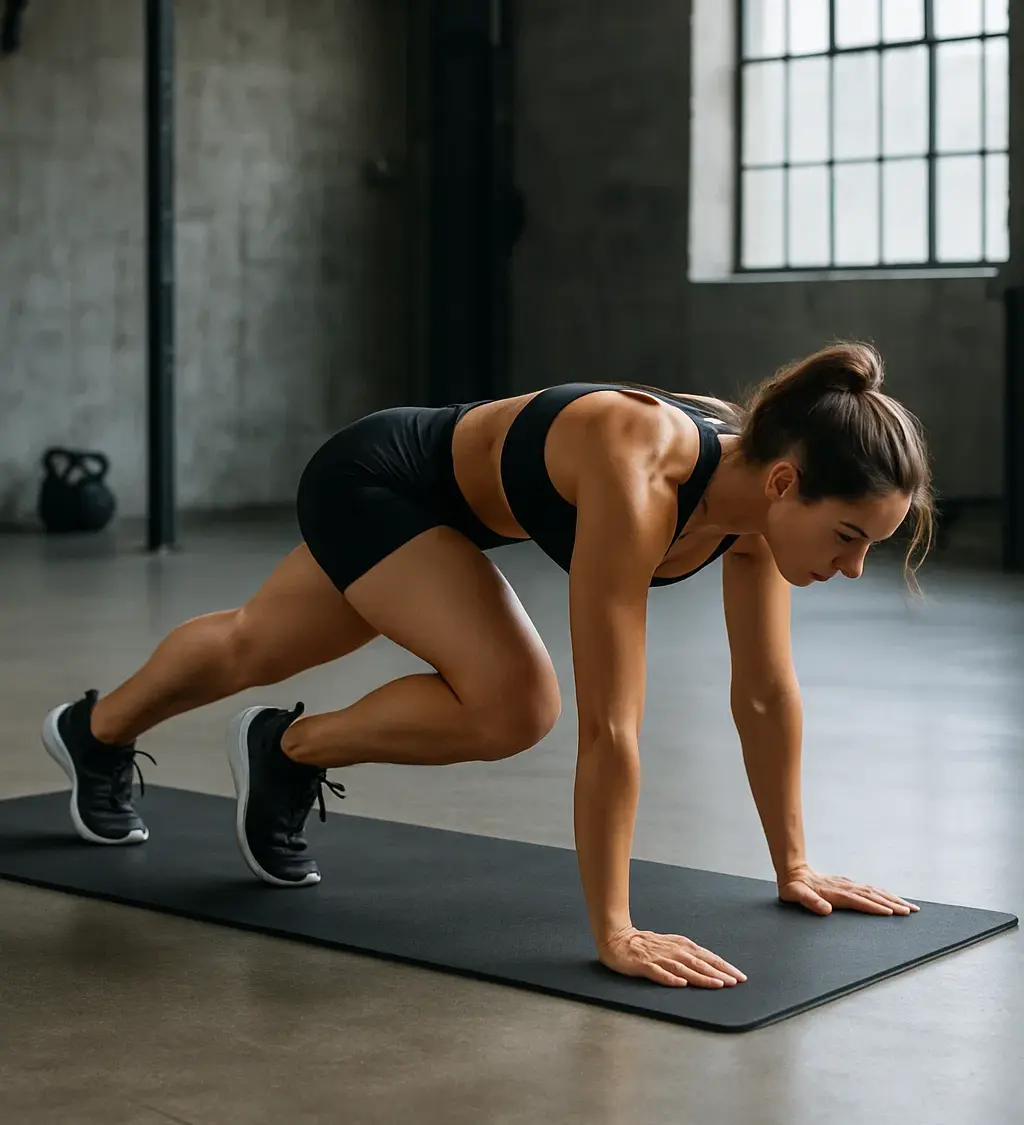
- Core: Planks, mountain climbers, leg raises
- Cardio: Burpees, high knees, jumping jacks
Master these patterns, and you have everything you need for a complete fitness program.
Progressive Overload Without Weights
"Progressive overload" sounds technical, but it just means: gradually make your workouts harder over time.
In a gym, you add weight to the bar. Without equipment, you progress differently:
- Increase reps: Can do 10 pushups? Aim for 15 next week
- Decrease rest time: Rest 60 seconds instead of 90
- Slow down tempo: Take 4 seconds to lower yourself in a pushup
- Add complexity: Regular pushups → decline pushups → diamond pushups
- Increase time under tension: Add pauses at the bottom of squats
The problem? Tracking all this manually is tedious. This is where technology helps. Apps that adapt your workout difficulty based on performance (like how Hiitology adjusts intensity after you rate each session) automate this progression without you having to think about it.
Form Matters More Than You Think
Without a trainer watching, it's easy to develop bad habits. Poor form limits results and increases injury risk.
The solution: Video demonstrations. Seeing the exercise performed correctly—and being able to reference it mid-workout—makes a massive difference. This is why most successful home fitness apps focus heavily on video guidance rather than just text descriptions.
You want to be able to glance at your phone and see: "Oh, that's how low my hips should be in a plank" or "That's the tempo I should use."
Workout Structure: The Missing Piece
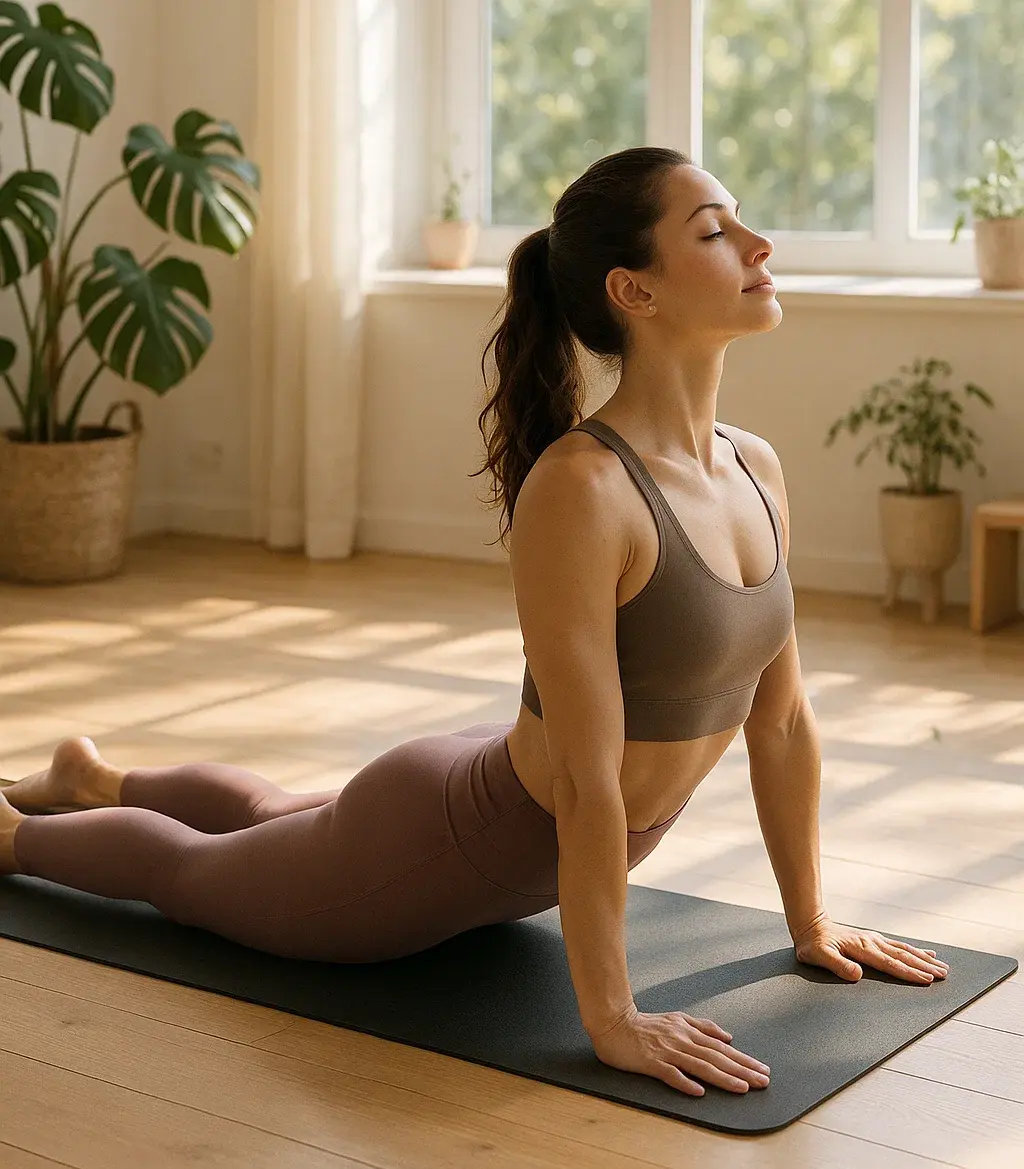
Here's what most people do wrong: they find a list of exercises online and randomly do some of them. No structure. No plan. No progression.
A proper workout needs warmup, main workout with structured intervals, and cooldown. This is where HIIT training shines for home workouts.
Here's what most people do wrong: they find a list of exercises online and randomly do some of them. No structure. No plan. No progression.
A proper workout needs:
- Warmup (3-5 min): Light cardio and dynamic stretching to prepare your body
- Main workout (15-25 min): Structured exercise with appropriate work/rest intervals
- Cooldown (2-3 min): Gentle stretching to aid recovery
For the main workout, HIIT (High-Intensity Interval Training) is particularly effective for home workouts. Short bursts of intense effort followed by brief rest periods. It's time-efficient and highly effective.
Basic HIIT structure:
- Work for 40 seconds
- Rest for 20 seconds
- Move to next exercise
- Complete 4-5 exercises, repeat 2-3 times
But here's the challenge: creating balanced, varied HIIT workouts takes knowledge. You need to mix upper body, lower body, core, and cardio appropriately. You need to vary intensity. You need to avoid doing the same routine repeatedly (your body adapts quickly).
This is why algorithmic workout generation is powerful. Apps like Hiitology pull from 45+ exercises to create unique combinations each session—ensuring balanced workouts without requiring you to be a fitness expert.
A Simple Starter Workout
If you're starting today and want something basic, try this:
Beginner Full-Body HIIT (20 minutes)
Warmup (3 min):
- Jumping jacks: 1 minute
- Arm circles: 1 minute
- Bodyweight squats: 1 minute
Main Circuit (15 min):
Do each exercise for 40 seconds, rest 20 seconds. Complete 3 rounds:
- Pushups (knees down if needed)
- Bodyweight squats
- Mountain climbers
- Reverse lunges
- Plank hold
Rest 1 minute between rounds
Cooldown (2 min):
- Gentle stretching
This works. But doing the exact same workout repeatedly will produce diminishing returns. Your body needs variety and progressive challenge.
The Motivation Problem
Let's be honest: working out alone at home is hard. There's no gym environment, no workout buddy, no class instructor keeping you accountable.
The solution? Set specific times, remove friction, track everything, and use voice coaching to replicate the class instructor experience.
Let's be honest: working out alone at home is hard. There's no gym environment, no workout buddy, no class instructor keeping you accountable.
What helps:
- Set specific times: "I work out Monday/Wednesday/Friday at 7 AM" beats "I'll work out when I feel like it"
- Remove friction: Lay out workout clothes the night before. The easier it is to start, the more likely you'll actually do it
- Track everything: Log your workouts. Seeing your consistency streak builds momentum
- Use voice coaching: Apps with voice announcements ("Get ready for pushups... Go!") replicate the class instructor experience
- Make it social: Share progress with friends or sync workouts to Strava for community accountability
- Focus on showing up: Even a 10-minute workout is better than nothing. Build the habit first, intensity second
The key insight: you're more likely to work out if the barrier to starting is low. This is why "just press play and follow along" approaches work so well for home fitness. Less decision fatigue, more action.
Common Mistakes to Avoid
What Kills Home Workouts
- No structure: Random exercises without a plan produce random results
- Same routine forever: Your body adapts in 4-6 weeks. You need variation
- Skipping warmup: Jumping straight into intense exercise risks injury
- Form over reps: 10 perfect pushups beat 30 sloppy ones
- All or nothing thinking: Missing one workout doesn't mean you've failed. Just do the next one
What You Actually Need
Let's cut through the noise. To work out effectively without a gym, you need:
1. Space: About 6 feet by 6 feet of clear floor space. That's it.
2. Structure: A system that tells you what to do, when to do it, and how long to work/rest. You can create this yourself (tedious) or use an app that does the programming for you (easier).
3. Proper Form: Video demonstrations showing correct technique. YouTube works, but having everything integrated into your workout flow is more convenient.
4. Progressive Challenge: Workouts that adapt as you get fitter. Manual tracking works but requires discipline. Automated adjustment (like rating workout difficulty and having future sessions adapt) is more sustainable.
5. Variety: Different exercises and combinations to prevent adaptation and boredom. Creating this yourself requires fitness knowledge. Algorithmic generation solves this.
6. Motivation Support: Voice coaching, progress tracking, social sharing—whatever keeps you showing up consistently.
Notice a pattern? The exercise itself is straightforward. The challenge is the system around it.
The Hiitology Approach
We built Hiitology specifically to solve these problems. Not because I wanted to create another fitness app, but because I got tired of:
- Planning workouts manually
- Doing the same Nike Training Club routines repeatedly (they literally only have 10 videos)
- Paying for bloated apps full of meal plans and content I don't need
- Losing my workout rhythm when traveling
What makes it different:
Algorithmic workout generation. Every session pulls from 45+ exercises to create unique, balanced workouts. You never do the same routine twice unless you want to.
Video demonstrations for every exercise. Shot in locations around the world (Iceland, beaches, rooftops, gyms, parks) so you can see proper form clearly. No guessing.
Adaptive difficulty. After each workout, you rate it: "Too Easy," "Just Right," or "Too Hard." Future workouts automatically adjust intensity based on your feedback. Progressive overload without manual tracking.
Voice coaching. "Get ready for pushups... Go!" announcements keep you on track. It's like having a class instructor, but you control the schedule.
Works anywhere. Home, park, beach, summer house, hotel room, office during lunch break—wherever you have 6x6 feet of space and 20 minutes.
Strava integration. Automatically syncs completed workouts so your fitness community sees your consistency.
Completely free. No subscription, no upsells, no bloat. Just HIIT workouts that adapt to you.
Ready to Start Your HIIT Training?
You don't need a gym. You don't need equipment. You just need a system that works.
Hiitology removes every barrier between you and an effective workout:
- No planning required - workouts generated automatically
- Video guidance for proper form
- Adapts to your fitness level
- Works anywhere you are
- Voice coaching keeps you on track
- Syncs to Strava automatically
- Completely free
Download once, work out anywhere forever.
Download freeThe Bottom Line
Working out without a gym isn't just possible—it can be more effective than a traditional gym membership for most people. Not because the exercises are better, but because convenience drives consistency, and consistency drives results.
The challenge isn't the exercise. It's the structure, progression, form guidance, and motivation. Solve those problems, and gym-free fitness becomes not just viable, but preferable.
You can build that system yourself—manually planning workouts, researching form, tracking progress in a notebook. It works, but it's time-consuming.
Or you can use technology to handle the tedious parts, freeing you to focus on the actual workout.
Either way, the point is the same: the gym is optional. Consistency is not.
Start today. Your living room is ready.
Ready to Start Your HIIT Training?
Download Hiitology and get access to video-guided HIIT workouts with adaptive difficulty and voice coaching.
Download on App StoreRelated Articles
HIIT Workout Using Bodyweight: The Complete Guide (2026)
Everything you need to know about bodyweight HIIT workouts — exercises, sample routines, and how to get started with no equipment required.
Why Motivation Is a Terrible Training Plan — And What Actually Works
Motivation is unreliable. Science-backed strategies — identity shifts, habit stacking, adaptive training, and enjoyment — are what actually keep you consistent.
Gym vs Bodyweight Training: Which Is Better?
Compare gym training and bodyweight workouts. Discover the pros, cons, and which approach is best for your fitness goals.